

What I Wish I'd Known About Lyme Disease
World record setting endurance cyclist Alan Colville candidly shares his experience combatting the debilitating effects of Tick-borne Lyme disease. (8 min read)
February 4, 2026
after the tick: what I wish i'd known about lyme disease
Delayed symptoms, nervous system recovery, and the reality beyond the antibiotics.
Words by Alan Colville
Foreword by Ed Bartlett
Images as credited
Foreword
Every now and then you meet someone who is just built differently as a cyclist. Interestingly, they often share similar characteristics - no monstrous ego, direct but calm and softly spoken, and no real obvious physical differences from you or I. But put them on a bike with a challenge and they are able - mentally and physically - to go to extremes that we couldn't imagine, even if we were capable of a similar training schedule.
Sarah Ruggins is one such rider. Alan Colville is another. But what always really impresses - and what truly elevates endurance riders from good to great - is their unique ability to deal with adversity. Alan doesn't really like to dwell on his past adversities - those of a kind that would probably stop many of us riding altogether - because they're in the past. Mentioning them at every opportunity would become a lens through which to view and define his achievements, rather than focusing on the achievements themselves. Why be defiined by something you've conquered?
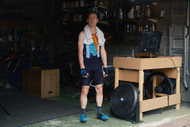
The picture below is from June 2025, during a training session climbing all of the main hills on the Mendips in preparation for a serious attempt at the epic Pure Peak Grit event (of which Kostüme is a returning title sponsor in 2026.) Fergus Coyle had been working on a film following Alan's meticulous preparations, with the intention of it culminating in the experience at the event itself. Not long after this, Alan successfully completed an Everesting of Crowcombe Combe on the Quantocks as part of his pre-event training ramp, with Fergus in tow. Everything was looking good, not least the footage being captured.
And then some days later the message that changed everything. Alan had somehow - despite being on a road climb, wearing mulitple layers - gotten a tick bite on the side of his torso. And with just a few days to go before Pure Peak Grit, the initial hopes of being able to continue were dashed by the onset of early symptoms of Lyme disease. All that training, focus and dedication...I think it's fair to say most people would be devastated. But it's testament again to Alan's mentality that even in writing this excellent and important article, none of this is even mentioned.
Alan is now back in structured training and hoping to return to the start line later this year. A huge thank you to him for taking time to share his experience in the hope of making more people Tick aware. Whether you've already had direct personal experience with Tick bites or even with Lyme disease, it's a topic that doesn't get enough coverage in cycling, especially with the increasing number of riders taking to gravel riding and bikepacking. Remember: it takes seconds to check!
A Tick The Size of an Apple Seed
Lyme disease doesn’t always arrive with drama. Sometimes it creeps in quietly, rewiring energy, mood and the nervous system long after the antibiotics are finished. Here’s what that looked like for me, and what everyone who spends time outdoors should know.
The Part Everyone Knows (and often gets wrong)
Alan pictured during a training ride a few weeks before contracting Lyme disease from an infected Tick bite. Photo: Fergus Coyle
Here’s what really matters:
-
Transmission risk increases significantly if a tick is attached for 24 to 36 hours
-
Risk increases further in Lyme-prevalent areas*
-
A red rash appearing 5 to 30 days later - especially one that gradually expands - is a red flag
-
You don’t always get the classic bullseye
-
You don’t have to feel acutely ill straight away
I did what many people do - I removed the tick, took note, and carried on. And then two weeks later, symptoms appeared.
The Part Fewer People Talk About
Antibiotics do their job. They clear the infection. But for a meaningful minority of people, including some treated relatively early, the effects do not end when the prescription does. Lyme disease can be followed by longer-lasting symptoms, sometimes referred to as post-infectious Lyme disease. This is generally considered uncommon, and its true prevalence, particularly in the UK, is still debated.
What I can say with confidence is that it happens. And when it does, it doesn’t always look like dramatic illness. What followed for me was something subtler, and in many ways harder.
-
Persistent headaches
-
Heightened anxiety under pressure
-
Sensitivity to screens and social situations
-
Poor tolerance for stress
-
Fatigue
-
An elevated heart rate for the same training effort
-
A constant feeling of being on edge
The best way I can describe it is that my body was stuck in fight or flight mode, even when nothing obvious was wrong. Stress felt amplified. Recovery took longer. Sleep stopped being restorative.
This experience is echoed in other cases where Lyme is diagnosed late or initially missed. Symptoms are often attributed to other conditions first, especially when they are neurological, cognitive, or fluctuate over time. That delay can make both diagnosis and recovery harder**
Putting the Kostüme cargo jersey through its paces on GBDuro in 2023 (Pic: Anthony Pease.)
Even Elite Athletes Can Relate
You don’t have to be unfit or uninformed to struggle with Lyme’s lingering effects. Even at the highest levels of sport, the pattern can look surprisingly similar.
One professional cyclist, a Giro d’Italia stage winner, spoke publicly about months of overwhelming fatigue, low mood and an inability to train effectively before a Lyme diagnosis finally explained what was happening. With treatment and time, he returned to full training and racing.
I mention this not for comparison, but for reassurance. Lyme’s impact can be subtle, stubborn and confusing, even in bodies that are otherwise exceptionally well conditioned.
Fight or Flight: The Hidden Impact
When your nervous system is stuck in fight or flight, stress feels amplified. Recovery takes longer. Sleep stops being restorative. Small pressures begin to feel disproportionately heavy.
As an athlete, I expected training to be the anchor. Instead, for many months after Lyme, it disappeared completely. I couldn’t train, didn’t feel like training, and even the idea of it felt distant. My body and nervous system were clearly not ready.
What made it harder was that life didn’t pause. Work continued. Parenting continued. Decisions still needed to be made. Yet my capacity to handle everyday load was far lower than it had ever been.
That mismatch between who you know yourself to be and what your body will currently allow is one of the most disorientating aspects of Lyme recovery. It also has a knock-on effect that isn’t talked about nearly enough.
Post training session in the immediate lead up to the Tick bite (Pic: Fergus Coyle)
Balancing Work, Recovery and Family Life
As a self-employed consultant, there was another difficult reality to face. I had to prioritise work.
There was no safety net, and keeping things going meant giving everything I had to work, even when there was very little left. For many months, my weeks settled into a strict and fragile rhythm. I worked Monday to Wednesday. I rested on Thursday. I worked again on Friday. Then I spent the weekend recovering enough to do it all again.
That routine got me through, but it came at a cost. It left little energy for anything else. No space for friends. Very little left for family beyond the essentials. And it took a toll on the people closest to me, who quietly absorbed the impact without complaint.
At the time, it felt like survival rather than balance. Looking back, I can see how narrow life became. But it was the only way I could keep moving forward while my nervous system slowly found its feet again.
Mood, Motivation and the Chemistry Nobody Warns You About
Another part that took me by surprise was the impact on mood. Lyme, combined with months spent in a heightened stress response, appears to affect serotonin regulation. The result is a low, flattened emotional baseline. You are not clinically depressed, but you are not yourself either.
Your motivation drops, resilience thins, and confidence wobbles. It becomes harder to advocate for yourself, harder to rest without guilt, and harder to recognise progress while it is happening. This matters, because recovery is not just physical. It is psychological, emotional and neurological, all at the same time.
One of the harder realisations during this phase was that, once the infection itself had been treated, there was very little structured medical support available for what came next.
My doctors did what they could and ruled out anything dangerous, but beyond that, there was no clear pathway for managing post-Lyme nervous system symptoms. There was no handbook, no timeline, and no obvious next step.
In many ways, recovery became something I had to navigate myself, by paying close attention to my body, learning what helped, and slowly rebuilding from there.
A screen captured from filming during the successful Everesting of Crowcombe Combe - the day of the Tick bite. (Pic: Fergus Coyle)
The Unexpected Lesson: A Dopamine Reset
One of the most important changes I made during recovery was an unplanned one. I had to drastically reduce my screen and particularly phone use. Screens were overstimulating an already sensitive nervous system. Scrolling, notifications, news and even light social media all pushed me further into fight or flight.
What started as a necessity turned into a lesson I will carry forward. By stepping back from my phone, I found myself enjoying simple things again; walks, time in nature, hands-on tasks like DIY, and being present with family.
Over time, it became clear that this wasn’t just about reducing stimulation. My brain was slowly relearning where to look for reward. Instead of chasing quick dopamine hits from my phone, I began to find satisfaction in slower, more meaningful activities away from screens. It was a kind of dopamine reset that few of us ever choose, but one many of us would benefit from.
What Lyme Took (and who it affected)
Lyme didn’t just affect me. It reshaped the people and parts of my life around me. My wife, Jane, carried more when I had less. My daughters, Amy and Esme, noticed when I was quieter, more irritable, or withdrawn. My work, which depends on clarity, presence and social energy, became harder to sustain. Even my confidence took a hit, particularly in situations that had once felt effortless.
From the outside, I often looked fine. Inside, my system was still recalibrating. None of this happened in isolation. I’m deeply grateful to Jane, Amy and Esme for their patience and adaptability, to Ed at Kostume for backing me and being there, and to my coach Oli for his perspective and support while I found my way back.
Thanks also go to longer suffering Jordan Matthews, a fellow GBDURO competitor, who’s been battling Lyme now for over a year and a half. Jordan has been great comfort in sharing some of what he had learned:
“Lyme hits active people harder because the drop feels bigger. If you’re used to operating at 90% and Lyme knocks you down to 30%, that’s a 60% fall. If you normally run at 50% and drop to 30%, it’s a 20% fall. Same illness, very different lived impact.”
What I’ve Learned (that might help you)
1. Early action really matters.
If a tick has been attached for more than a day, monitor closely. Photograph any rash. Don’t wait weeks if symptoms appear, like if the red dot stays 6 to 10 days after the tick was removed. That could be a sign of infection. Be clear and persistent with your GP if symptoms appear.
2. Energy budgeting matters.
“One thing that’s helped is being upfront with people. Socialising now costs me far more energy than it used to, so I let people know in advance, and I’ve learned to say no more often. It’s made a big difference to managing fatigue.” Jordan Matthews
3. Exercise can help, unmanaged stress often hurts.
Gentle aerobic movement helped regulate my system. Yoga became my go to. Screens, pressure and social overload brought symptoms back.
4. Heart rate changes don’t always mean loss of fitness.
My power returned before my heart rate normalised. That pattern is now recognised in post-infectious recovery.
5. This disease rewards patience.
The people who do best are not those who push the hardest, but those who manage load, physical, mental and emotional, intelligently.
What I’d Say To Anyone Who Finds a Tick
How the bite presented on Alan - this can vary significantly from person to person. (Pic: Alan Colville)
Don’t panic, but don’t dismiss it either. Remove it properly, note the date, and watch for symptoms over the following weeks, especially the red dot where the tick was. Take rashes and unexplained changes seriously. And if you’re treated, expect recovery to take longer than the antibiotics. Most people recover fully. But recovery often happens more slowly and unevenly than we expect.
The Big Lesson
Lyme disease isn’t just about clearing an infection. It’s about helping the nervous system find its way back to safety. I’m improving. Training has returned over the past month. Stress tolerance is slowly rebuilding. But the biggest shift has been understanding this: Healing isn’t about forcing your way back to normal. It’s about helping the system step out of fight or flight, and stay there.
If this helps one person spot a tick earlier, act faster, or feel less alone during recovery, then the tick that changed my year will at least have done some good.
Useful Links
Lyme Disease Patient Guidance for GP's - https://cks.nice.org.uk/topics/lyme-disease/management/management/